

Posts Tagged ‘keywords’
You must have thought of various ways to get more traffic to your Blog website. More traffic =more views=more revenue. In simple words you are looking out for various approaches to build traffic to your blog website. Here is one great strategy that will bring quality visitors to your website adding value to your business- usage of Long tail keywords.
What are Long tail Keywords?
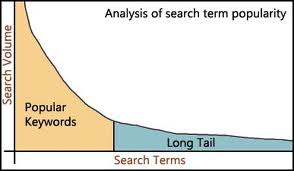
 Long tail keywords are a type of keyword phrase that has at least three, and at times as many as five words in the phrase. Long tail keywords are used when you want to refine search terms and give specific information to the searcher. These keywords are highly specific, and attract less traffic for the website, but tend to draw more quality traffic, which leads in more conversions than normal keywords. Long tail keywords can also be used by publishers and visitors in different ways to benefit their business.
Likewise visitors are on the search for specific info and they type in long search terms to get closer to the topic they are searching for. Long tail keywords are less popular than short tail keywords also referred to as ‘Head words’. For eg: if you are looking for the generic term “paper bags”, you will have a large number of bidding websites and if you type in specific words “handmade paper bags online india” you will come across fewer sites and your search becomes easy.
10 Reasons to Use Long tail Keywords and Get More Traffic to your Blog website
New bloggers are not familiar with the concept of long-tail keywords and do not realize the immense potential these keywords can do to your Blog website. Long tail keywords is not complicated and the biggest advantage is that long-tail keywords benefit SEO too.
-
Less competition
Let us check the following key phrases:
paper bags online 4,79,00,000 results found on Google
handmade paper bags 39,00,000 results found on Google
handmade paper bags online 31,70,000 results found on Google
handmade paper bags online india 12,50,000 results found on Google

 This is a clear indication that longer search terms gives fewer sites to match i.e less competitive
-
Significant traffic
One long tail key word may not make all the difference by bringing tons of traffic and visitors to you website. However, long tail keywords are advantageous and can work miracles. You will get specific and important customers that will profit your business.
-
Better targeted traffic
Long tail keywords help to describe your requirement better. Foe g: when you describe a missing person you give as many details as possible such that identification will be easy. Similar is the case of long tail keywords: the better a phrase describes what you are looking for, the higher the chances that you will find just the product or service you need. Visitors who end up on your site after typing in long-tail keyword phrases are likely to be just the people you are targeting.
-
Higher conversion rates
The people searching with long term keywords are serious buyers and they are looking for specific info, their search normally converts better. Therefore, investing in long-tail keywords is often a dead sure ROI (Return On Investment) and a winning “quality over quantity” strategy.
-
Long-tails includes your head words
 Long tail keywords already comprises the short keywords / head words which is also part of the search term keyed in by the visitor. For example “handmade paper bags online india” contains head words like ‘paper bags’ and ‘handmade paper bags’ in it. This way you are able to address 2 requirements in one shot.
-
Ideal for highly competitive niches
In some areas of business there is fierce competition. It is not easy to come on the top pages of Google SERP’s. Yet you can strike a smart deal by adding long tail keywords in your posts or website. This way your chances for getting higher on the search terms are brighter.
For eg: if you own a small hotel/ lodge in Hyderabad. There are plenty of lodges and hotels in the area and it will not be easy to trace you out. Forget the ranking, just look at how you can restrict the search by optimizing keywords to your benefit.
hotel near hyderabad airport : 1,88,00,000 results in Google(nearly half a billion)
budget hotel near hyderabad airport shamshabad : 4,12,000 results in Google
It doesn’t sound different but definitely the results look significant.
-
Long-tails beat personalization
These days results are getting more personalized, and custom tailored to a particular user’s geographical location, age, sex, interests, etc. Search results are based on locality of the user. Long-tail keywords can help you optimize your website for different categories of users, since long-tails are more specific. For eg: you can have a separate landing page for ‘handmade paper bags’ or ‘designer paper bags’. In short to minimize the negative effect personalization may have on your SEO, use more long-tail search terms for your SEO campaign
-
Perfect for PPC campaign
Most Internet marketers agree that PPC (Pay Per Click) advertising should be mostly long-tail. Basic reason: In PPC, you pay each time someone clicks on your ad. If you bid on non-specific, very general search terms you’ll have lower click-through rates and lower conversions. You will be wasting a lot of money on ill-targeted traffic. But, if you bid on more specific phrases i.e long tail keywords that better describe what you sell or offer, you are likely to attract just the right visitors to your site, and your PPC campaign will pay off sooner
-
Pick Ideas from Google Analytics
You will get ideas for long-tail keyword ideas straight from Google Analytics or any other Web analytics tool you are using. Besides, in Google Analytics you already see how many people came to your site by looking up a particular term, whether they converted or not – all that stuff. You will now agree that is another reason to put long-tails on your keyword list!
-
Simple and Easier to optimize
It is much more easy to conduct on-page optimization if you are including long-tail keywords. This is because, first of all, you will not require so many of them on the page. Second, a couple of long-tails look more natural in your website than do numerous short-tail terms. This provides a better user experience, and, again, helps conversions.
| If you are interested to own a Blog website Visit our Online Web Store and make your choice |
|---|
Hope these reasons will make you re-think and optimize your site for long-tail keywords. The mistake some SEO starters make is they just overlook long-tail search terms altogether, and miss out on some really great SEO opportunities. But, for sure, this will not happen to you, since now you know where the power of the long-tail keyword and the impact it can create in business blogging.
Related reading:
How to Increase Pageviews and Reduce Bounce Rate in WordPress
Tips to Use keywords to Rank High in Google Search Results
Top 10 ways to Increase Traffic to your Blog Website with Facebook
SEO – Optimize Post Titles to Get High Traffic
Tips to Increase Your Page Views and Get More Blog Traffic
 SEO optimized post titles are the most essential requirement to get high traffic to your website. Title is the key part of your post because if your title has not the power of attraction then the whole article doesn’t work anymore. A blog post title has a major role when it comes to search engine optimization and therefore placed the right way so that Google may appreciate it.
Lot of brain storming needs to be done prior to finalizing upon a title for a blog post or article. Make sure that the title and URL are having the same text. Optimize your blog title is descriptive and long titles. You have to write meaningful and attractive titles for your article. The long titles have enough words in it to describe the purpose of the post by using multiple keywords
SEO – Optimize Post Titles to Get High Traffic
Descriptive & Long titles
The first tip for optimizing your blog title is descriptive and long titles. Spent quality time to pen down a meaningful and attractive article with a eye catchy title for your article. The long title must have enough words in it to understand the purpose of writing the blog post.
Use Keywords
Include keyword in your title and that will get automatically included in the URL. Balance your focus on creating a meaningful blog post as well as a title that has unique keywords. Advanced bloggers follow the technique of using multiple keywords in the post title.
Match content of title and article
The most important trick is to match the content of the title and the content of the page so that Google can make sure about the exact information that you are writing about. Attempt playing with the present titles of your blog and optimize them to see what works the best in bringing high traffic to your blog and of course never forget to leave comments behind. Maintain a balance between SEO friendly post and your readers.
Usage of H1 tag for title
 A post title has to have a proper H1 tag and no other tags. It is very important to note that the title should have the first letter capital for every word. H1 tag should not be used elsewhere in the page. The H1 tag, the most important tag, is usually used for main topic of the web page. It is recommended that we should use only one H1 tag on one web page. This causes some different ways of position H1 tag, its implementation in the header of website (blog) and the title of posts.
Make sure you have an H1 Tag on every page you want to optimize. The H1 tag must use the bold tag and your key phrase should be listed first, just like your Title tag.
One more advantage of this method is that the H1 tag is not repeatable across pages. It means different pages talk about different things.
| If you are interested to own a Blog website Visit our Online Web Store and make your choice |
|---|
Social Media
Popular method to gain high traffic for your site. Social media plays a vital role for promotion and popularity. You can promote your article/ blog post through various social sites like Facebook, Twitter, LinkedIn, YouTube, Google+ etc.
Optimize your titles in such a way that the title is eye catching and has a wow factor , also take care that it sounds genuine not laughable. Visitors should be drawn towards reading the article. Read a lot and gain expertise from others writings too. Surf the net and watch out for the great blogs and take a learning or two from such sites.
Remembering a famous quote “Most of the important things in the world have been accomplished by people who have kept on trying when there seemed to be no hope at all”.
Add your inputs in the comments if missed out on any key factor.
It is important for your website to be found by Search engines and human visitors. For that you need to use top keywords, assign correct categories, label right tags for each posts to enable organize the content on your Blog website. Newbies may be confused to understand the difference between Tags and Keywords and their relevance for the search engines.
Let us understand the difference between Tag and Keywords in a Blog website:
Before we proceed you need to get a briefing on the categories too.
Categories: Categories are used to organize posts based on subject. Categories provide an useful way to group related posts together, and to quickly tell readers what a post is about. Categories also make it easier for people to find your content.
Tags: Tags are similar to categories, but are used to describe the post in more detail and are optional. Tags provide a useful way to group related posts together and to quickly tell readers what a post is about. Tags also make it easier for people to find your content.
Keywords: keywords are terms that are used repeatedly in the content of a post. Keyword is included in the title, tag, meta description too. Unlike tags and categories, keywords are not entered into a separate column or field when creating an article, infact the keywords are integrated into the blog posts itself.
What are Tags?
 Tags are labels that are used to categorize the posts on your Blog website. For example if your blog’s niche is about “healthy eating”, you can have a tag for ‘healthy diet’, ‘diet and exercise, etc. For all posts about healthy diet and associated recipes you would assign the same tag. For posts related to calories and exercise regime you will assign the ‘diet and exercise’ tag.
The more organized you are with your tags, you will get more readers to your blog website in search of that keyword they had been searching. Using long tags i.e a combination of words will make your blog posts remote and less important for the search engine to index.
Use broader tags for your posts than the regular length ones. You can have many articles linking to that particular tag by keeping it broad. It is not right to use multi versions of the same tag words. If you use the same words in a tag in a different version eg: exercise and nutrition, adding plurals, variations in the word eg nutritious ,capital letters, etc. will assign the tag as a new one.
Tags are more like onsite filters. You use 4-5 tags per blog post to help describe the key subjects/ topics within the post. They could be thought of as keywords but the intent here is to make these generic enough they can be used again and again.
What are Keywords?
 Keywords are used by search engines to identify what your blog and your blog articles are about. A Search engine knows what terms are highly searched by users, and looks for those words and phrases on web pages.
The search engine uses this information with other complicated logarithms to assign a particular blog or website a page rank. This is where “search engine optimization” comes in. If you optimize an article on your blog with a particular keyword, the search engine will be able to pick up it and will hopefully assign your article a decent page rank for that particular keyword.
To summarize, this actually helps visitors searching for the keyword to land on your blog website and find your article. This can happen because the search engine has determined that your article is a good resource for that particular keyword or search term as per ranking assigned. This is not the only way Search engine assigns Page rank for your Blog website but this is a key factor.
Keywords have SEO value and are typically the META Keywords hidden from the user but readable by them if they view source for any page. These are read by the search engines to help rank the page they are used on.
| If you are interested to own a Blog website Visit our Online Web Store and make your choice |
|---|
Why is Keyword Research critical for your Blog website?
For any blog website to run successfully with huge traffic you need to abide by the guidelines set in the blogosphere. You should not add keywords on your own i.e keywords that are not associated to the article. You need to choose keywords that are related to your blog’s niche that people are looking out for. There are plenty of Keyword tools by which you can identify different search terms and find the highest searches for each term.
You can then include these search term phrases skillfully into your article and improve on optimizing your Blog website.
By using highly searched keywords for your tags, you not only increase your blog’s overall SEO, you also increase the user’s experience on your blog website. Your blog posts will be well categorized for highly searched terms and phrases, making your blog easy to use and navigate through.
This was a brief on the difference between Tags and Keywords which are the key for any blog.
 You might have spent days, weeks and even months creating a stunning blog with nice graphics and good content but then you realise that no one is looking at your blog! A blog is just like any other websites. Of course sometimes people stop and look at it but that is not enough.
Often people feel that the website is ready what next. Knowing what to do next and how to turn a website from idea to profit can be a challenging task to take on! First thing you need to do is get into the mindset of your target market.
One of the easiest ways to understand the needs and wants of a market is to be a part of that market. Remember not every product you release or service you set up is going to be a hit.
The best we all can do as business owners is understand the market and provide what we thing they need. Then listen for their response and adjust. We’re not always going to get it right the first time.
| If you are interested to own a Blog website Visit our Online Web Store and make your choice |
|---|
You need to have strategies to promote your website or blog. Below are a few key strategies:
- Find the correct place to promote your website, like twitter and facebook.
- Make sure that your site is optimize, like using description, title and keywords tags in your page that in PHP or HTML.
- Submit your site into big search engines like Yahoo, Bing and Google to get your page being indexed by different Search Engines.
- Finding free traffic to your site like using Yahoo answers, forums and articles.
- Remember to upgrade your learning from time to time, always attending course that related to internet marketing and as we cannot learn everything by our own. Allocate some money and prepare to upgrade ourselves.
- Keep doing the above steps for at least 30 days for each site that you are going to promote before your can see any result.
Those are the steps that I’m using currently which I feel very effective.
| Follow us | |||||
|---|---|---|---|---|---|
 |
 |
 |
|||
 |
|
|---|---|
 |
|
 |
|
 |
|
 |
 |
 |
|
 |
|
Recent Posts

Mastering the Casino An Advanced Guide for 11 Winner Enthusiasts || Read More
March 6, 2026
Onlayn və oflayn q umuk oyunları arasında fərqlər nələrdir || Read More
March 6, 2026
Popüler oyunları keşfedin jojobet ile kazanç elde etmenin yolları || Read More
March 6, 2026
G'alabaga erishishning ta strategiyasi qimor o'ynashda muvaffaqiyat sirlarini o'rganing || Read More
March 6, 2026
Mastering casino etiquette Tips for a smoother gaming experience || Read More
March 6, 2026